
Thai massage is one of the most renowned traditional healing practices in Southeast Asia. Often referred to as “Thai yoga massage,” this ancient therapy combines acupressure, assisted yoga postures, and energy line work to promote physical and mental well-being. But what is a Thai massage exactly, and how does it differ from other types of massage? Let’s explore.
The Origins of Thai Massage
Thai massage, known in Thailand as Nuad Thai or Nuad Boran, traces back over 2,500 years to ancient India. It is believed to have been developed by Shivago Komarpaj, a physician and contemporary of the Buddha, who merged Ayurvedic principles, Chinese medicine, and yoga techniques.
Through centuries, Thai massage has evolved in temples, passed on by monks and healers, and is now officially recognized by UNESCO as part of Thailand’s intangible cultural heritage.
Ready to experience the real thing? Book your authentic Thai massage in Bangkok and feel the benefits for yourself.
What Happens During a Thai Massage?
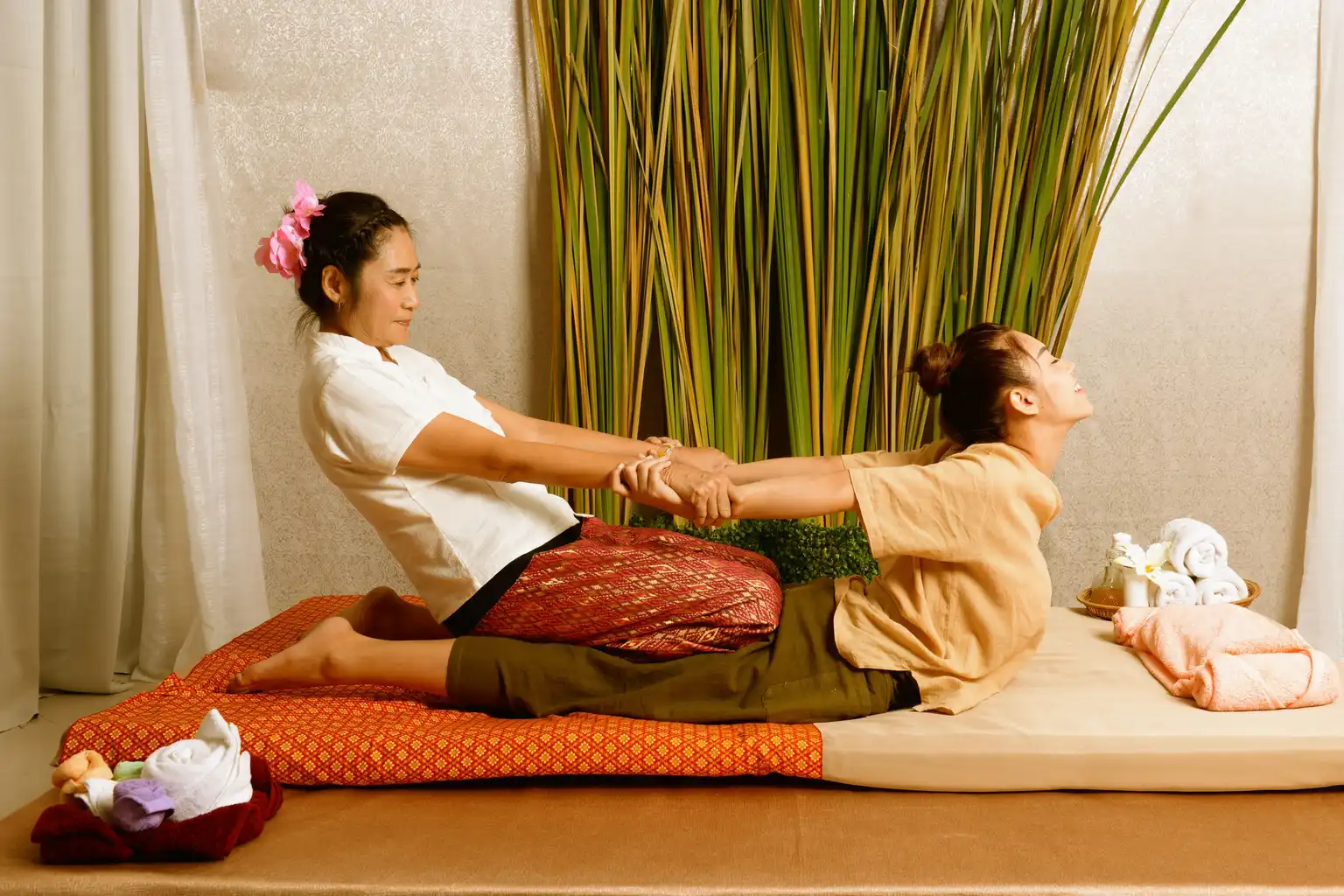
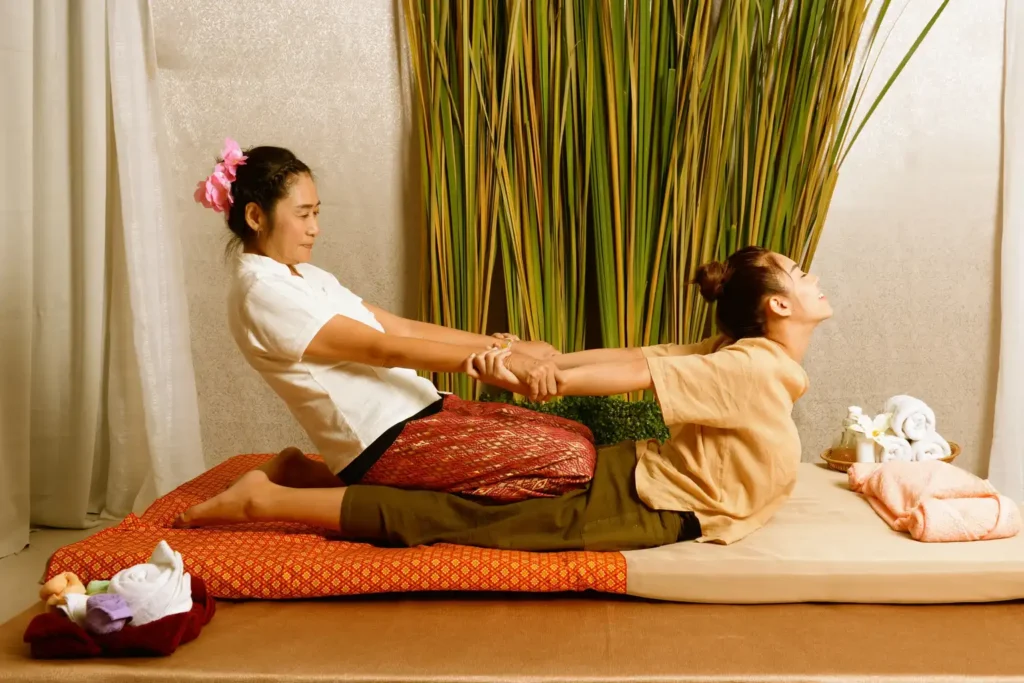
Unlike Western massages that are performed on a table with oils, Thai massage is typically done on a floor mat, fully clothed, and without oil. The therapist uses hands, thumbs, elbows, knees, and even feet to apply pressure and perform passive stretching.
A Thai massage session can last between 60 to 120 minutes and involves:
- Rhythmic pressure along energy lines (called Sen lines)
- Stretching movements similar to yoga poses
- Joint mobilization
- Breathwork and meditation techniques
This full-body treatment is designed to stimulate internal organs, balance the body’s energy, and improve flexibility.
Key Benefits of Thai Massage
If you’re wondering what a Thai massage does for the body and mind, here are some evidence-backed benefits:
- Improves flexibility and joint mobility
- Boosts circulation and lymphatic drainage
- Reduces muscle tension and chronic pain
- Promotes deep relaxation and stress relief
- Supports energy flow and mental clarity
- Helps with posture and body alignment
Thai massage is especially effective for people suffering from back pain, tension headaches, stiffness, or fatigue from a sedentary lifestyle.
Experience the art of Thai wellness in Bangkok, discover all our treatments and expert therapists at Beyond Massage.
Thai Massage vs Swedish Massage: What’s the Difference?
Many people ask: “Is Thai massage the same as Swedish massage?”
The answer is no, they are fundamentally different in technique and philosophy.
| Feature | Thai Massage | Swedish Massage |
|---|---|---|
| Position | On a mat, fully clothed | On a table, with oils |
| Technique | Stretching, pressure, joint work | Long strokes, kneading, circular rubs |
| Tools used | Hands, elbows, knees, feet | Mostly hands and forearms |
| Style | Dynamic, active | Gentle, passive |
Thai massage is more active and energizing, while Swedish massage is better suited for gentle relaxation.
Who Should (and Shouldn’t) Get a Thai Massage?
Ideal for:
- Athletes or active individuals
- People with desk jobs or postural issues
- Those experiencing muscle tension or stiffness
- Anyone looking for a holistic mind-body treatment
Avoid if:
- You’re pregnant (especially in the first trimester)
- You have serious joint injuries or spinal conditions
- You’ve recently had surgery or a medical condition affecting blood flow (e.g., thrombosis)
Always consult your doctor or massage therapist before booking a session if you’re unsure.
Common Questions About Thai Massage (FAQs)
Is Thai massage painful?
It can feel intense, especially during stretches, but it shouldn’t be painful. A good therapist adjusts pressure to your comfort.
Do I need to bring anything?
Wear loose, comfortable clothes. Most salons provide attire, but it’s best to check beforehand.
How often should I get a Thai massage?
Once a week or every two weeks is ideal for ongoing benefits, especially for those with chronic tension or stress.
Is tipping customary in Thailand for massage?
Yes, tipping is appreciated. A 10–20% tip is standard in most Thai massage spas.
Final Thoughts: Why Try a Thai Massage?
Now that you understand what a Thai massage is, you can see why it’s more than just a spa treatment. It’s a unique blend of ancient medicine, mindful movement, and physical therapy, all rolled into one.
Whether you’re looking to relieve pain, improve mobility, or just relax deeply, Thai massage offers a transformative experience for body and mind.
Ready to Experience Authentic Thai Massage?
If you’re visiting Thailand or have access to a certified Thai massage therapist near you, don’t miss the chance to try it. Book a session, listen to your body, and feel the difference.